
What Is a Pittsburgh Lock in Ductwork?
Published · Updated
A Pittsburgh lock is a longitudinal corner seam used to join rectangular sheet-metal duct panels.
One edge forms a receiving pocket. The mating flanged edge fits into the pocket, and the remaining edge is closed over it to complete the seam.
Understand the Pittsburgh Lock Profile
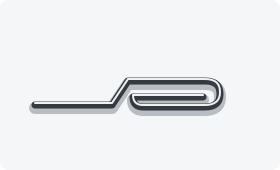
The receiving pocket
A series of folds creates a pocket along the sheet edge. Its geometry must match the mating flange so the panels can fit together.
Schematic only. Confirm actual dimensions with a drawing or sample.
The formed sheet edge
The original sample shows the folded lock pocket. Check the profile and sample fit before choosing the machine tooling.
Original forming sample from the WinYing product reference.
How the Seam Is Formed and Closed
Prepare the panels
Prepare the sheet-metal panels and mating edges for the required duct construction.
Roll-form the pocket
Progressive roller stations shape the sheet edge into the Pittsburgh lock profile.
Insert the mating edge
Fit the mating flanged edge into the open pocket and align the duct panels.
Close the seam
Close the free edge over the inserted flange using the appropriate seam-closing method.
Forming the pocket and closing the assembled seam are separate operations.
Pittsburgh Lock vs Duct Flange: Different Jobs
| What to compare | Pittsburgh lock | TDF / TDC flange |
|---|---|---|
| Connection direction | Along the length of a duct section | Across the ends of adjoining duct sections |
| Main purpose | Join sheet-metal panels at a longitudinal seam | Connect one duct section to the next |
| Profile and assembly | Receiving pocket, mating flange and seam closure | Flange profile and matching connection components |
| Equipment to confirm | Lock forming and seam-closing equipment | Flange forming equipment for the specified profile |
A rectangular duct workshop may use both systems at different stages of production.
What to Check Before Choosing a Machine
Material & thickness
Specify the material grade and full sheet-thickness range. Confirm capacity for your actual material.
Profile & sample fit
Send the lock drawing or a formed sample. Check the pocket, mating edge and completed seam together.
Production workflow
Confirm output requirements, other profiles needed and how the formed seam will be closed.
Why samples matter: Profile names can vary by market. Match the actual geometry and tooling to your duct construction requirements.
Explore Lock Forming & Seam Closing Equipment
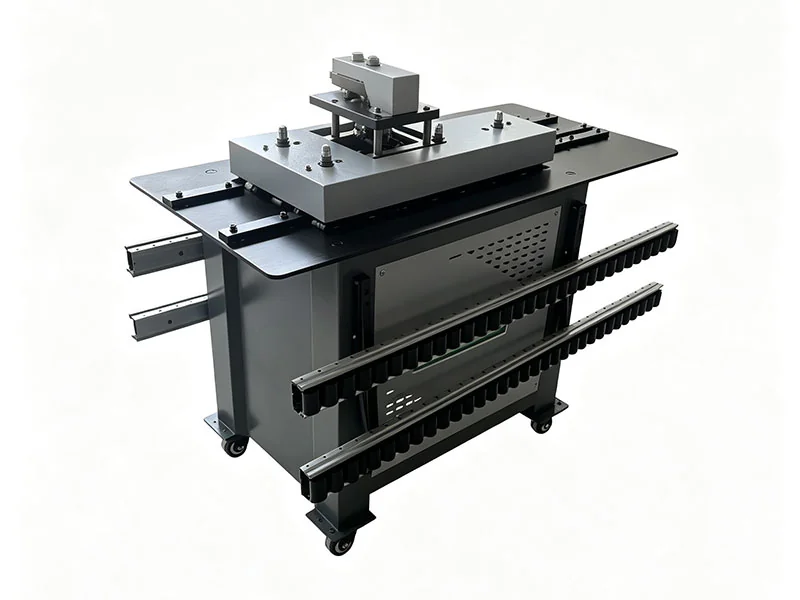
Pittsburgh Lock Forming Machine
Form the receiving pocket and confirm the available profiles for your selected model.
View Lock Forming Machine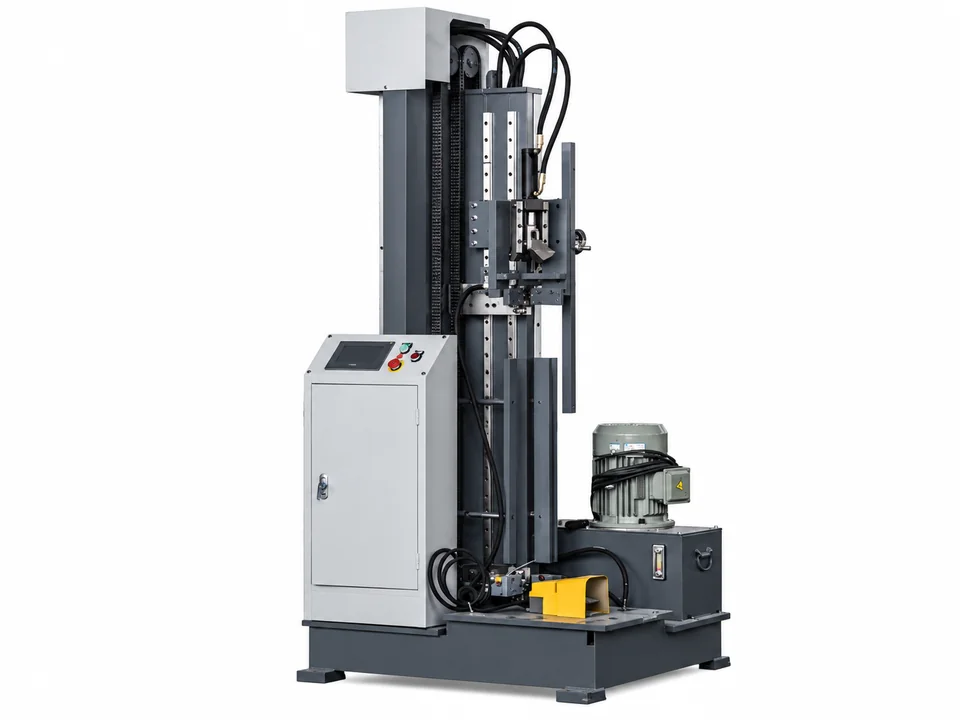
Hydraulic Duct Seaming Machine
Review the SL-12 rectangular seam closer and confirm your Pittsburgh profile, duct dimensions and material.
View Seam Closing MachineReference capacities and profiles must be kept together
The SA model table lists SA-12HB at 0.5–1.2 mm sheet with 1.5 kW power, and SA-15HB at 0.8–1.5 mm with 2.2 kW. These are model ranges, not approval for every material grade. Confirm stainless or other material requirements explicitly.
The product page shows several forming samples, including right angle, cleat and standing profiles. Available shapes depend on roller configuration. Mark the profiles needed for each job in the quotation rather than assuming every illustrated sample is included.
Plan the closing machine for the actual rectangular seam
The H-E electric closer's current product reference is for round ducts and compatible fittings. It should not be assumed suitable for rectangular Pittsburgh seams. For this workflow, review the SL-12 rectangular hydraulic closer, listed at 0.4–1.5 mm thickness and 1000–1550 mm processing length, or another specifically confirmed closer.
Capacity overlap is only a starting point. Check corner access, duct dimensions, pocket geometry and mating flange together. For short fittings or unusual lengths, request a sample-based review instead of stretching a processing-length rating.
What a useful forming and closure trial proves
- Prepare panels in the quoted material at representative thickness limits.
- Form the receiving pocket and mating edge with approved tooling.
- Check dimensions, coating condition and fit before closing.
- Assemble and close a complete representative duct.
- Inspect joint gaps, deformation and any specified sealing test.
A formed edge that looks neat does not prove complete joint compatibility. Retain the approved sample and operating setup for future batch changes.
Quotation details for a duct workshop
WinYing Machinery's application review starts with the actual material, dimensions and process. Send a pocket drawing, mating sample and duct size range, plus required extra profiles and output. Confirm rollers, closing equipment and acceptance scope within the duct production solution. Use the seaming guide to check downstream matching.
| Equipment | Published capacity | Separate confirmation |
|---|---|---|
| SA-12HB lock former | 0.5–1.2 mm; 1.5 kW | Grade and included profiles |
| SA-15HB lock former | 0.8–1.5 mm; 2.2 kW | Grade and mating edge |
| SL-12 rectangular closer | 0.4–1.5 mm; length 1000–1550 mm | Complete duct geometry/profile |
Frequently Asked Questions
Does a lock former close the finished duct seam?
A lock former shapes the sheet edge into the required profile. The panels are then assembled and the Pittsburgh seam is closed in a separate operation.
Is a Pittsburgh lock the same as a TDF or TDC flange?
A Pittsburgh lock joins panels along a longitudinal seam. TDF and TDC are transverse connection systems used at duct-section ends.
Can one machine form several lock profiles?
Some machines have multiple forming profiles. The available shapes depend on the model and roller configuration; confirm each required profile before ordering.
What information is needed for a quotation?
Provide material grade, sheet thickness, the profile drawing or sample, power standard and production requirements. Include any additional profiles and seam-closing needs.
Can the illustrated H-E closer be assumed suitable here?
No. Its reference describes round ducts and compatible fittings. Confirm a closer specifically for the rectangular seam and workpiece.
Technical reference: BlueScope Steel — Lock-seaming steel sheet and strip (TB-F6).