
Choose a Duct Seam Closer by the Joint
Published · Updated
Start with the prepared joint and its workpiece. A rectangular closer, a round seamer and a portable tool are not interchangeable just because they share a thickness range.
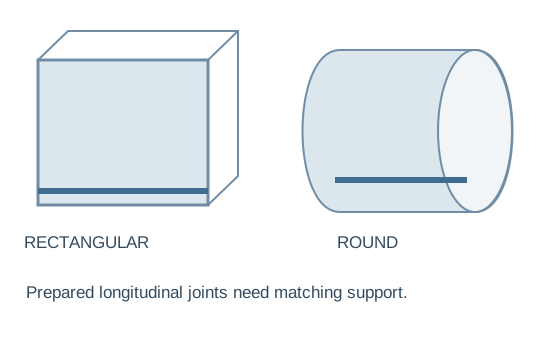
First choose the geometry—not the power label
Rectangular duct route
Review corner access, minimum section size and processing length. SL-12 and the HFL-12 overview describe this production route.
A folded panel needs a compatible receiving pocket and mating edge before closing. Confirm the complete duct, not an isolated sheet strip.
Round duct and fitting route
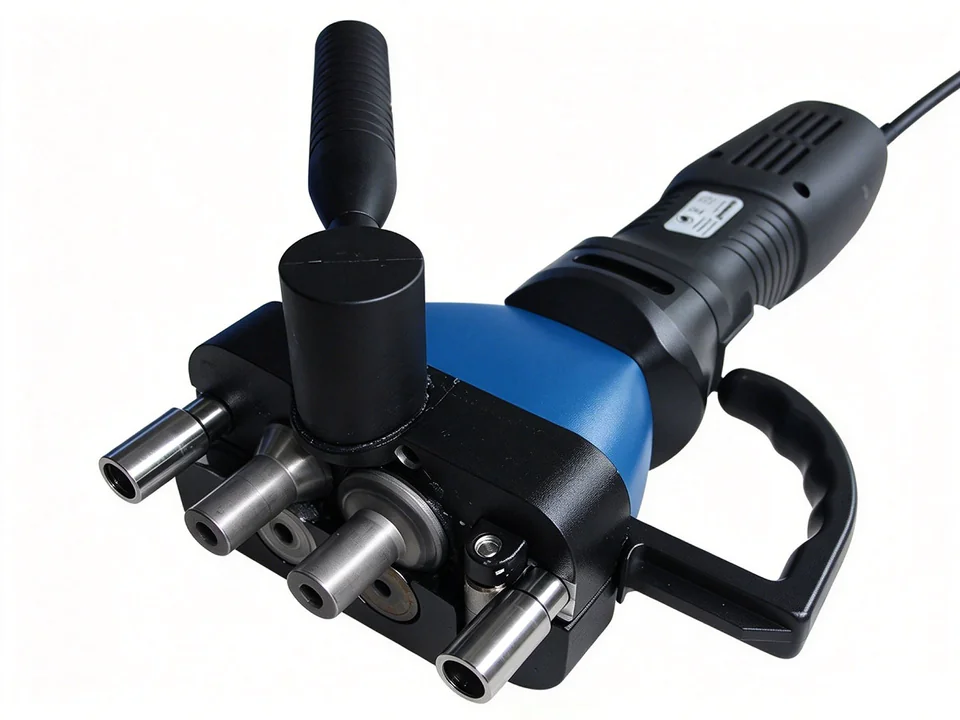
Review diameter, straight joint orientation, workpiece support and fitting access. The round 1.2×1500 reference and H-E portable tool describe round applications.
Do not equate straight longitudinal closing with the continuous helical locking inside a spiral former.
Three jobs that should not be confused
Form the edge
A lock former makes the mating profile in the sheet. Check the pocket and flange drawing and available roller set. It does not establish assembled-seam closure.
Close the prepared seam
A compatible closer works on the assembled joint and supported duct. The profile, thickness, length and access must match the workpiece.
Make a specified weld
A welded construction needs a separately confirmed process. A mechanical closer does not replace the required welding method or inspection.
A lock former shapes panel edges; those edges are then assembled and closed. The Pittsburgh process therefore requires both profile tooling and a compatible closing arrangement.
A mechanical closer does not replace a specified welded joint. Review welding equipment separately where the drawing calls for welding. A transverse flange connects duct ends; it does not perform longitudinal seam closure.
Model references: compare the right dimensions
| Reference | Geometry and capacity | Confirm before purchase |
|---|---|---|
| SL-12 | Rectangular; 0.4–1.5 mm; length 1000–1550 mm; 4 kW | Joint fit and minimum section |
| HFL-12 | Rectangular overview; 0.5–1.2 mm; length 1000–1500 mm; 4 kW | Geometry wording and air supply |
| Round 1.2×1500 | Diameter 110–2000 mm; 0.4–1.2 mm; length ≤1500 mm | Grade and longitudinal seam |
| H-E | Round ducts/fittings; reference 6–10 m/min | Radius/diameter and thickness configuration |
Scroll the comparison table horizontally to see every column.
The published rows are a starting point. Material capacity, joint geometry, supports and utilities need written confirmation for the selected model. A portable travel-speed figure is not equivalent to the processing length of a stationary machine.
Resolve ambiguous entries before ordering
HFL-12 geometry wording
The overview describes rectangular duct closing, but its parameter table labels the length differently. Ask for the actual workpiece drawing, available supports and closing profile; do not guess which label governs the purchase.
H-E radius / diameter wording
The H-E reference lists round applications and several geometric entries that need clarification. Confirm the radius/diameter definitions, voltage and thickness configuration before treating the tool as suitable for a small fitting.
A round-tool reference does not prove a rectangular application
Use a complete prepared sample
For rectangular Pittsburgh work, review SL-12 with the intended pocket and mating edge. For round work, review the 1.2×1500 reference with the actual diameter and joint.
Include the shortest fitting, smallest cross-section and longest section that recur in your orders. These reveal access constraints that a nominal thickness check cannot show.
What the acceptance joint must show
- 01Prepare
Use the agreed grade and matching profiles.
- 02Mate
Check fit and alignment before closure.
- 03Support
Position the actual duct in the quoted arrangement.
- 04Close
Inspect engagement and finish along the full joint.
- 05Verify
Complete the specified dimensions and performance test.
Record loading and removal as part of output. Compare useful joints per batch, including adjustment and rework, rather than only the moving tool speed. A neat closed edge is not proof that the completed duct meets a sealing specification.
Send a joint sketch and prepared workpiece
WinYing Machinery reviews the application before matching closing equipment. Include both geometry and the forming route so the quotation can identify a compatible seam closer.
Discuss this application →- 01Joint drawing and material / thickness
- 02Minimum and maximum duct dimensions
- 03Straight lengths and fitting access
- 04Utility standard and finished-joint criteria
Frequently Asked Questions
Does a lock former close the duct?
It forms the edges. Check the separate assembly and closing operation.
Can H-E be assumed suitable for rectangular seams?
No. Its current reference describes round ducts and compatible fittings. Obtain confirmation for any other geometry.
Does pneumatic mean no electrical supply?
No. HFL-12 lists 4 kW drive power. Confirm electricity and compressed-air requirements.
Does closing prove leak-tightness?
No. Verify sealing details and the project-required test on the completed duct.