
How Segmented Round Duct Elbows Are Made
Published · Updated
Plan the finished elbow and its seams before choosing a forming machine. This is sheet-metal fitting fabrication, not bending a single tube into an elbow.
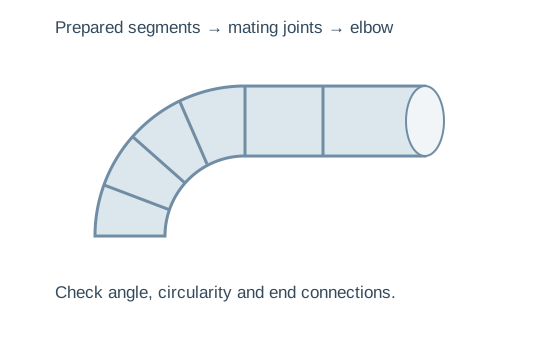
Read the drawing from the complete fitting inward
Overall geometry
State duct diameter, total turning angle, specified elbow radius and end-connection details. Diameter alone cannot define the segment layout or tooling.
Use the approved construction for the segment count and reinforcement. Two elbows of equal diameter can still need different geometry and production work.
Every mating joint
Show segment edge profiles, seam allowances and the desired finished joint. Supply a photo or sample of an acceptable connection alongside the drawing.
Different grades, coatings and project inspection requirements can change the route. A generic segmented-elbow name does not confirm these details.
Five stages between sheet and a finished elbow
Develop the blank
Translate the approved segment layout into cut shapes and required edge allowances. Confirm whether development and cutting equipment are separate.
Shape each segment
Prepare the cylindrical or segment geometry. Check circularity and the fit of the mating edges before joining.
Form the joint edges
Match tooling to the specified connecting profile. Do not infer the profile from the machine name alone.
Join in the specified sequence
Keep segment orientation and overall angle aligned. Review how the fitting is supported at difficult joint locations.
Finish and inspect the ends
Complete the required end connections, then check the entire elbow rather than only one formed seam.
Two machine references, different material confirmations
| Item | DCP-1000 | DCH-1250 |
|---|---|---|
| Diameter | 125–1250 mm | 125–1250 mm |
| Thickness | Maximum 1.2 mm; material confirmation needed | Black steel 0.4–1.5 mm |
| Other materials | Grade-specific confirmation | Galvanized/aluminum 0.4–1.2 mm; stainless 0.4–0.8 mm |
| Power | 3 kW | 5 kW |
| Weight | 460 kg | 750 kg |
Scroll the comparison table horizontally to see every column.
The DCP-1000 lists 125–1250 mm diameter and maximum 1.2 mm sheet; obtain the material basis. The DCH-1250 gives separate black steel, galvanized, stainless and aluminum limits. These must not be combined into one blanket maximum.
Published forming speed is not finished elbows per hour. Blank preparation, segment handling, joining and inspection all remain in the output calculation.
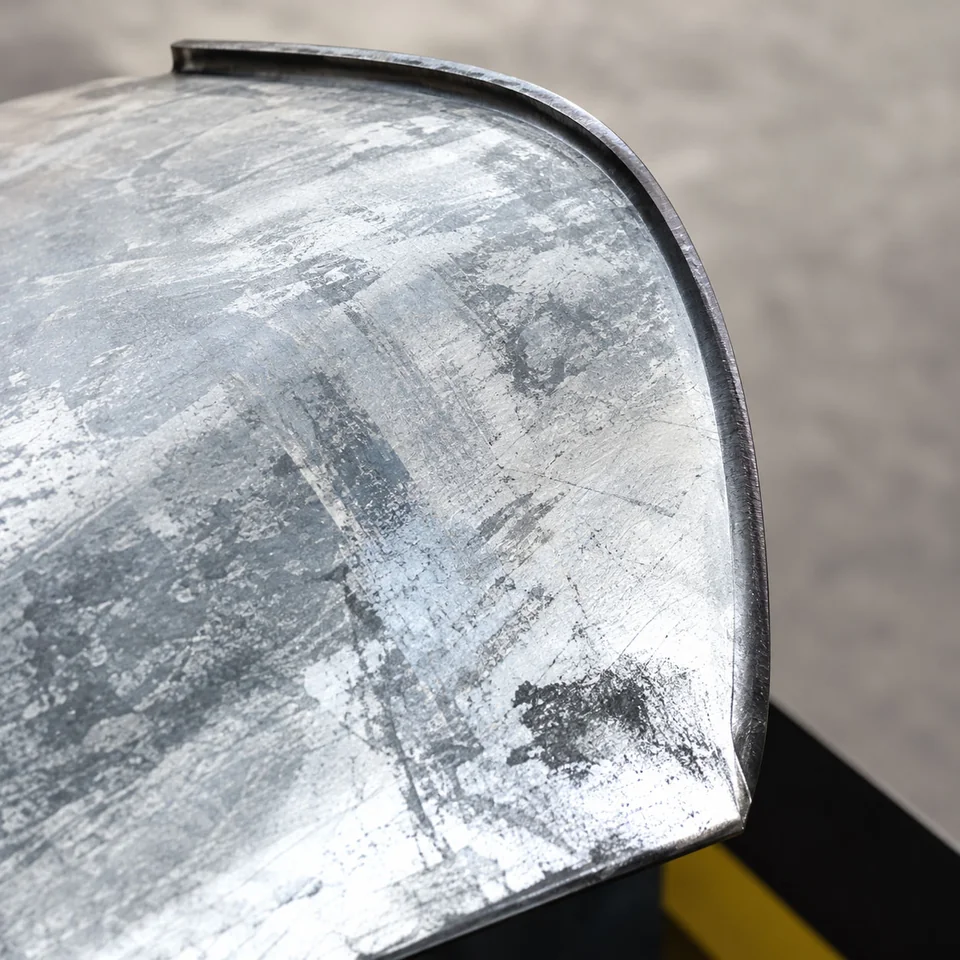
Edge preparation is visible in the workpiece
What the sample should establish
Check the quoted forming profile together with the mating segment. Inspect material condition, engagement and completed geometry after joining.
A demonstration on a large, easy segment does not show access to a short segment or small fitting. Include the difficult recurring joint in the trial.
Define capacity as finished elbows per order
Forming time
Published speed describes a machine operation. Ask which movement it measures, under what material and setup conditions.
Complete fitting time
Count blank preparation, shaping, joining, end finishing and inspection. Include changes of diameter or material. This is the output your dispatch plan needs.
DCP-1000 lists a maximum sheet thickness without a separate material breakdown in its headline. DCH-1250 lists different capacities for black steel, galvanized, stainless and aluminum. Use the material-specific row rather than selecting by the largest number.
Specify the complete fabrication route
DCP-1000 segmented equipment
125–1250 mm diameter, maximum 1.2 mm sheet and 3 kW reference. Confirm grade and joint tooling.
View configuration →DCH-1250 hydraulic equipment
125–1250 mm diameter with separately listed material thickness ranges and 5 kW reference.
View configuration →Show the elbow and the joint you need
WinYing Machinery can review the finished fitting and production requirements before discussing configuration. Ask the proposal to identify separate cutting/shaping equipment as well as forming and joining.
Discuss this application →- 01Diameter, angle, radius and segment layout
- 02Grade, thickness and seam detail
- 03End connections and shortest segments
- 04Batch quantities and acceptance measurements
Frequently Asked Questions
Is this a pipe bender?
No. This route assembles sheet-metal segments; a pipe bender curves a tube workpiece.
Does the elbow machine cut every blank?
Confirm development, cutting, shaping and joining scope for the quoted machine.
Can DCH-1250 process 1.2 mm stainless?
The published reference states 0.4–0.8 mm stainless. A different requirement needs separate confirmed capacity.
What drawing is needed?
Include diameter, angle, radius, segment layout, grade, thickness, joint profiles and end connections.