
Spiral vs Rectangular Duct Production
Published · Updated
Compare the equipment you need to deliver each shape—not just the speed of a main machine. Fittings, connections and material handling belong in the investment decision.
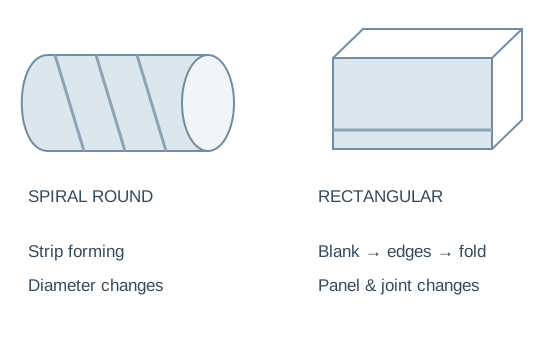
Trace the two production lanes
Coil strip to tube
Prepare strip → form edges → set diameter → lock the helical seam → cut → make fittings and connections.
Plan forming molds, tube discharge, length storage and elbow fabrication. The spiral equipment range supplies the main straight-duct route.
Blank to assembly
Prepare blank → bead/notch → form locks and flanges → fold → close → complete reinforcement and joints.
Plan panel transfers, tooling compatibility and closing capacity with the rectangular solution.
What changes when your order changes?
| Item | Spiral round | Rectangular |
|---|---|---|
| Stock | Narrow coil strip | Sheet or coil-fed blanks |
| Size changes | Diameter tooling | Blank size, folds, connection tooling |
| Connections | Specified round joints/fittings | Longitudinal seam and transverse flange |
| Downstream work | Cutting, elbows, assembly | Closing, corners/cleats, reinforcement |
| Handling | Tube discharge and storage | Transfers between stations |
Scroll the comparison table horizontally to see every column.
A round diameter change and a rectangular panel-size change involve different adjustments. Ask suppliers to demonstrate the recurring changes in your actual order mix rather than an uninterrupted best-case run.
Choose the route from the orders you receive
Straight round runs
Prioritize diameter tooling, supported cut length and discharge. Then verify the capacity of elbow and fitting work needed to ship a complete order.
Broad rectangular sections
Prioritize blank accuracy, reinforcement layout, edge profiles and folding/closing access. Check the largest blank against every downstream station.
Mixed fittings and short batches
Count setup and assembly time. Flexible separate stations may remain useful beside an automatic line; integration should address the operation that holds up shipment.
Build one investment plan for a mixed workshop
- Record a representative week of orders by shape, material, size and fitting count.
- Time preparation, forming, transfers and assembly separately.
- Identify the operation delaying complete orders.
- Compare separate stations with automation using the same jobs and staffing.
- Reserve loading, service access and finished-goods space for both routes.
Keep existing equipment in the planning list. A blank-processing line may work with current lock/flange stations, while a new spiral former may still require dedicated elbow equipment.
Three boundaries the machinery proposal must respect
The project defines the shape
Use approved project drawings to establish shape, material, dimensions, reinforcement and connection requirements. Machinery convenience does not authorize a change in specified duct shape. Group orders by diameter or panel size, material, batch quantity and fitting count.
Long round runs, broad rectangular panels and small mixed fitting batches place different demands on changeovers and handling. A high forming speed offers little benefit if fitting assembly or joint closing delays dispatch.
A specification is not a whole-factory output promise
The tube-mold reference lists 100–1600 mm diameters and 137 mm strip, but the actual mold supply and grade limits must suit the order. Rectangular line functions likewise need an equipment-by-equipment scope.
Use finished components with connections for acceptance. A setup demonstration cannot establish an approved system design or its pressure performance.
Coordinate the equipment interfaces
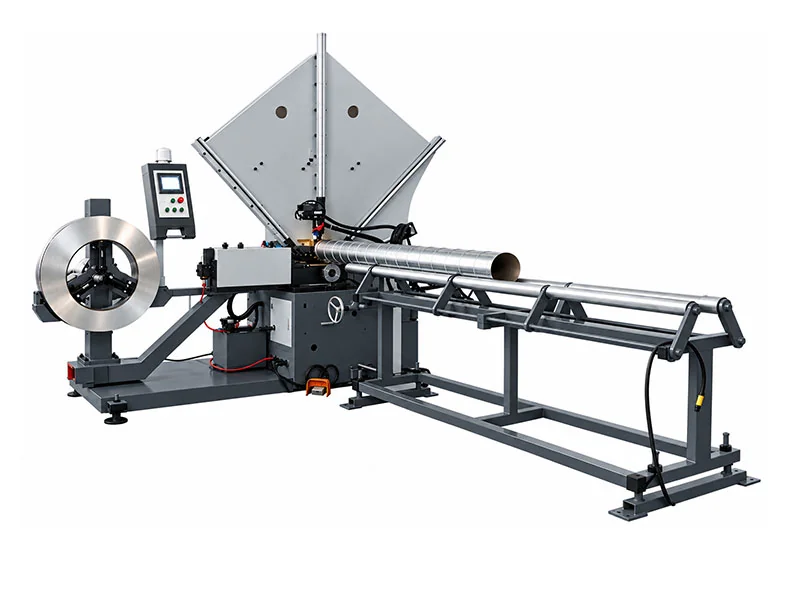
Straight round route
Review diameter range, stock and head/mold changes, then plan elbows and fitting assembly.
View configuration →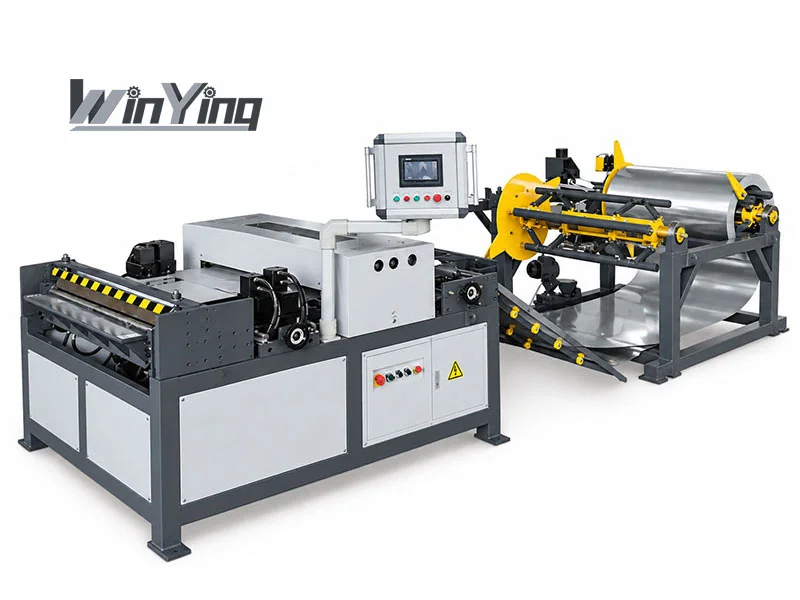
Rectangular route
Map blank processing to existing lock, flange, folding and closing equipment.
View configuration →The images show equipment references, not a promise of identical configurations. Compare the actual quoted machines.
Describe both sides of your order book
WinYing Machinery can review the round and rectangular production requirements together. Include existing equipment so the proposal addresses useful capacity and actual transfers.
Discuss this application →- 01Shapes, sizes and material matrix
- 02Fitting counts and connection drawings
- 03Existing stations and operator arrangement
- 04Workshop floor plan and batch mix
Frequently Asked Questions
Does a spiral former make rectangular ducts?
The systems discussed here produce round tube. Rectangular fabrication uses a different process route.
Does a rectangular line make round elbows?
Do not assume that operation is included. Confirm dedicated elbow equipment and tooling.
Which needs fewer operators?
Compare complete workflows. Loading, changes, transfers and assembly can outweigh the main forming cycle.
Can one workshop make both shapes?
Yes, with suitable routes and capacity planning for material handling, utilities, storage and finishing.