
Choose a Plate Roller from the Finished Shape
Published · Updated
A thickness figure alone is not a rolling specification. State the plate grade, full width, finished diameter and end condition so the proposal describes a feasible part.
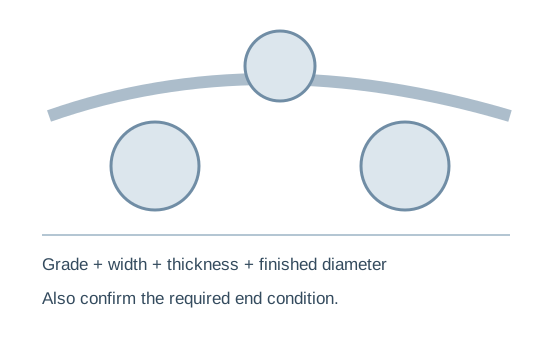
Three shapes ask different questions
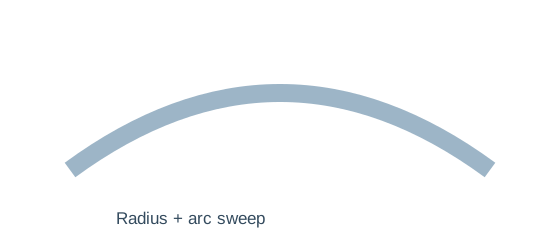
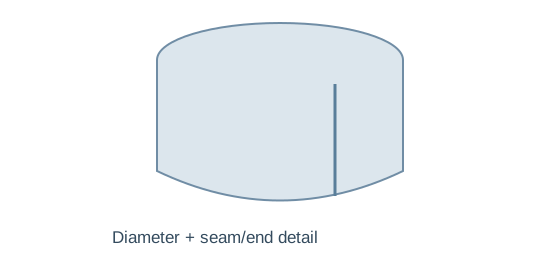
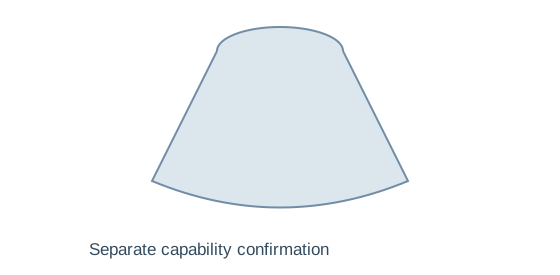
Provide a drawing of the cylinder, arc or other required curved component. State inside or outside diameter explicitly, working width, plate thickness, seam allowance and the permitted end condition. For arcs, define the required sweep and radius rather than saying only 'curved plate'.
Include material grade and surface requirements. A vessel shell, ventilation component and architectural curved panel can require different inspection criteria even when their blank sizes are similar. Any welding or fabrication approval remains a separate part of the project.
Rolling capacity and pre-bending capacity are separate
Roll the required curvature
Confirm the full plate width and grade at the specified finished diameter. A narrow sample and a large loose arc do not establish a smaller full-width cylinder.
Ask which roll arrangement and passes the proposed process uses, then include setup and support in the output estimate.
Meet the required end condition
Define permissible straight ends, edge preparation and seam allowance. A rolling rating does not automatically establish end pre-bending or removal of flat regions.
Request the end procedure and separate performance confirmation. Do not hide unwanted end condition by measuring only the middle of the shell.
Define where the part goes after rolling
Fit and joining
Show the seam or mating detail and any later welding/assembly requirement. Finished curvature must work with that next stage.
Workpiece support
Explain full width, length and surface criteria. Ask for the actual support arrangement during forming and handling.
Release from the machine
A cylinder needs a practical unloading route. Demonstrate removal of the complete representative part, not only forming an open strip.
Choose the configuration with the drawing
| Question | Your application | Supplier confirmation |
|---|---|---|
| Capacity | Grade, width, thickness, finished diameter | Rating for that combination |
| Ends | Permitted flat/end condition | Pre-bending route and capacity |
| Roll arrangement | Cylinder, arc or conical work | Actual configuration and tooling |
| Support/release | Part size, surface and handling | Support and unloading method |
| Output | Batch quantities and shape changes | Complete accepted production cycle |
Scroll the comparison table horizontally to see every column.
The WinYing range includes manual, mechanical, electric and hydraulic references. Their exact model width, thickness, diameter and power are confirmed with the configuration; this guide does not assign unverified numerical capacities.
Mechanical rolling
Review the actual drive, roll arrangement and drawing-based capacity.
View configuration →Hydraulic rolling
Review the actual positioning, support, end procedure and drawing-based capacity.
View configuration →An acceptance shell should expose the limiting condition
- Use the quoted grade, thickness and full working width.
- Demonstrate the required end-preparation route.
- Roll the representative minimum finished diameter.
- Measure shape and end condition using agreed methods.
- Show safe support, unloading and repeat production.
Allow for passes, setup and handling in output estimates. A single narrow strip trial does not establish full-width capacity or finished-cylinder accuracy.
Specify the cylinder or arc you will deliver
WinYing Machinery reviews the finished geometry and stock before discussing a roller configuration. Provide diameter convention and ends so the proposal can distinguish rolling from pre-bending performance.
Discuss this application →- 01Grade, width and plate thickness
- 02Inside / outside diameter or arc drawing
- 03Required end condition and seam allowance
- 04Support, unloading and batch needs
Frequently Asked Questions
Can I select by thickness alone?
No. Include grade, width, finished diameter and end requirements.
Is rolling capacity pre-bending capacity?
Do not assume so. Ask for separate confirmed performance for the required ends.
Are numeric models confirmed on the current pages?
The current rolling references mark key model capacities for confirmation. Request a written technical proposal.
Can every roller make cones?
No blanket cone capability is established. Confirm tooling, configuration and a representative trial.