
Mechanical Plate Rolling Machine
Define the roll rotation, adjustment and release mechanism before selecting a mechanically driven rolling configuration.
- Drive description
- Mechanical
- Roll arrangement
- Quote-specific
- Capacity
- Material / model-specific
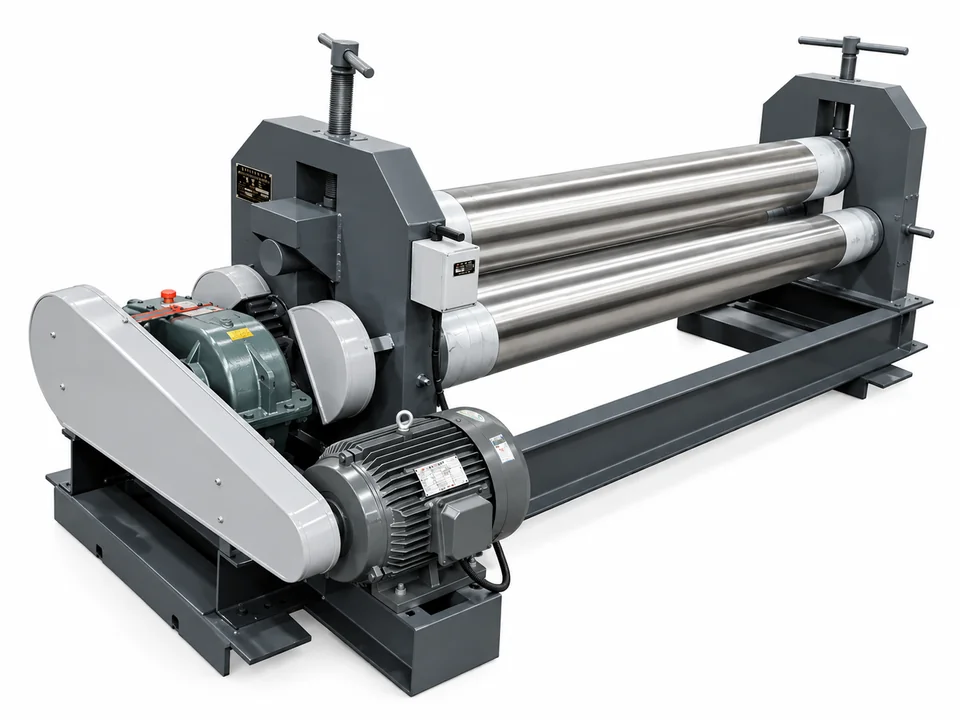
Mechanical drive is a starting description
The current source describes mechanically driven plate rolling but supplies no model-specific roll count, adjustment system, width or thickness. Establish the actual mechanism before comparing capacities or operator functions.
| Machine function | Required clarification |
|---|---|
| Roll rotation | Drive transmission, operation and speed for the selected model. |
| Roll positioning | Which rolls adjust and how the settings are made. |
| End preparation | Whether any required pre-bending is included or separate. |
| Part release | How the formed shell is opened or removed. |
| Support / control | Included supports and operator-control functions. |
Specify the blank and the accepted shape
Full workpiece definition
Give material grade, thickness, rolling width and the required radius or diameter. Include any flat end allowance, seam condition and surface requirements.
A cylindrical shell and a partial curved plate need different acceptance checks. State the shape and joining route so the proposed mechanism can be reviewed against the finished part.
A setup-led rolling trial
- 01
Identify the blank
Record material and prepared dimensions.
- 02
Agree the roll setup
Use the selected adjustment mechanism and supplied operating procedure.
- 03
Form and check
Inspect the intended curvature and end condition.
- 04
Repeat the setup
Review adjustment and accepted results for the recurring batch.
Record the Actual Mechanical Configuration
| Selection item | Required confirmation |
|---|---|
| Working width / material capacity | Selected-model combined rating. |
| Roll arrangement / diameters | Actual configuration and minimum workpiece conditions. |
| Drive / positioning | Included rotation and adjustment mechanisms. |
| Electrical requirements | Selected machine’s complete power standard and load. |
| Layout / shipment | Approved machine drawing, mass and packed dimensions. |
Compare alternatives by the operation, not the label
Mechanical and electric descriptions can overlap because a motor can drive a mechanical transmission. Ask WinYing to identify rotation, positioning, controls and support on each proposed model. This gives a useful comparison without claiming that every differently named roller has a distinct standard package.
Questions to settle before ordering
Is the roll count confirmed?
No. The current source has no model-specific roll arrangement.
Does mechanical mean there is no motor?
The label alone does not establish the drive package. Confirm rotation, transmission and utilities.
Is pre-bending included?
No included pre-bending function is confirmed. Specify the required end condition.
How does it differ from an electric roller?
Descriptions may overlap. Compare the actual motions, adjustments and controls.
What information helps select a model?
Grade, thickness, width, finished shape, end condition and recurring batch requirements.
Tell Us Your Plate Rolling Requirements
Tell us which plate rolling machine you need, plus material, thickness, working width, required diameter and production requirements.