
Snap Lock Forming Machine
Explore our Snap Lock forming machine for duct joints. Select the SNAP machine from the complete mating corner joint, not a profile name alone.
Forming snap-fit sheet metal joint edges requires matching corner geometry and engagement. Check coating, profile dimensions and trial fit before specifying tools.
The Snap Lock forming machine price depends on the required corner profile, sheet material and supplied roller tools. Send both mating-edge drawings to WinYing, a supplier in China, and confirm the manufacturer, factory supply terms and trial-fit requirements. Matching a profile name does not by itself establish a compatible joint. Compare related options: Lock Forming Machines.
- Model
- SNAP
- Sheet reference
- 0.4–1.0 mm
- Motor
- 2.2 kW
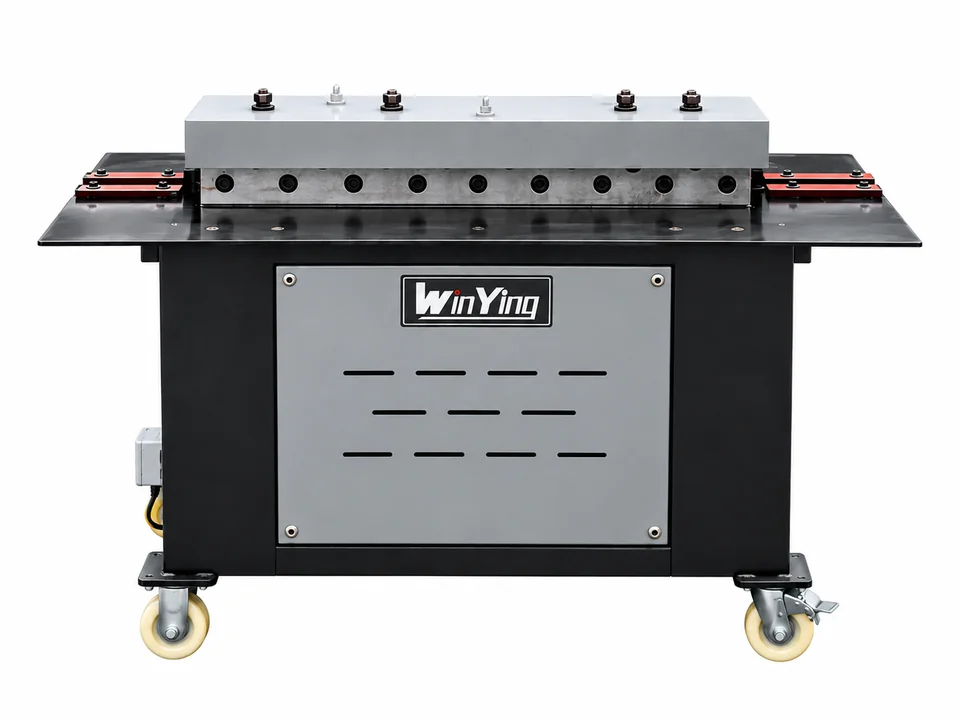
Snap Lock Forming Machine: Seam Preparation and Selection
A snap lock forming machine prepares mating sheet-metal edges for compatible HVAC duct connections. Select the SNAP model by the actual receiving profile and matching edge, rather than the seam name alone. Check the joint drawing, material grade and coating, sheet thickness, roller configuration and trial assembly before ordering. The listed 0.4–1.0 mm sheet range and 2.2 kW motor are reference specifications for the SNAP model; confirm compatibility with your material and tooling. Profile forming does not necessarily complete downstream seam closing. Compare lock forming machines, S-lock forming and duct seaming methods when planning your duct fabrication workflow.
When selecting a snap lock forming machine for ductwork, check the formed receiving pocket and mating edge together. The SNAP reference model must be matched to the duct seam geometry and sheet material; forming a profile does not by itself verify the assembled joint. Send the seam drawing and trial-fit requirements with your inquiry.
Choose the finished corner connection first
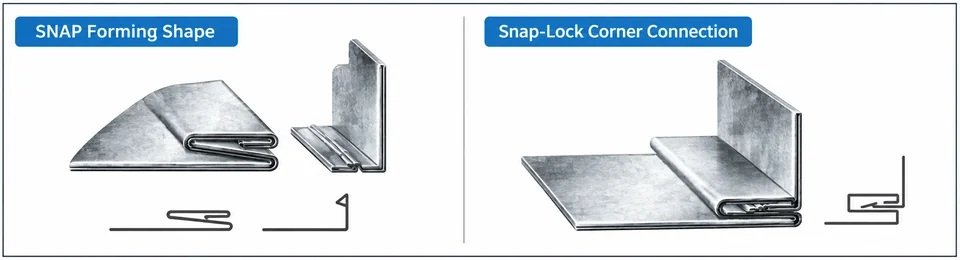
Profile formation is only part of joint acceptance
Receiving and mating edges
The required corner geometry governs the roller set. Share both edges and the completed connection so the proposed SNAP profile can be checked for engagement.
Assembly and final condition
Confirm how the prepared edges are assembled and whether further closing or finishing is required by the construction. The word snap does not approve every duct joint.
SNAP Reference Model
| Model | Profile | Sheet thickness (mm) | Power (kW) | Weight (kg) | Dimensions (mm) |
|---|---|---|---|---|---|
| SNAP | Snap-lock edge | 0.4–1.0 | 2.2 | 250 | 1450 × 570 × 1000 |
0.4–1.0 mm is the supplied range. Confirm the material basis, profile fit and electrical standard; 2.2 kW is the listed motor power, not a throughput rating.
Inspect the seam detail
A practical comparison sample
Use the specified material at representative thicknesses. Inspect the formed profile, mating fit, final corner shape and surface condition.
Keep an approved sample for later setup. It is evidence for the quoted configuration, not a universal profile standard.
Existing equipment or workpiece reference. Confirm the supplied configuration.
Questions to settle before ordering
Is it the same joint as Pittsburgh lock?
The supplied SNAP reference is a different corner connection. Match the actual drawing.
Does 1.0 mm apply to all grades?
No universal material rating is established. Confirm grade and tooling.
Will every mating edge fit?
No. Approve the complete corner sample and its dimensions.
Does it remove all later assembly work?
Confirm assembly, closing and finishing requirements for the chosen duct construction.
What is needed for quotation?
Both mating-edge drawings, material, thickness, power standard and batch requirements.
Request a Snap Lock Forming Machine Quote
Send your snap-lock seam dimensions, material, thickness and required power supply so we can confirm a suitable model.